Quick Answer: How to Get Rid of a Raccoon Under Your Deck
To get rid of a raccoon under deck areas, make the space uncomfortable using light, sound, or scent so it leaves on its own.
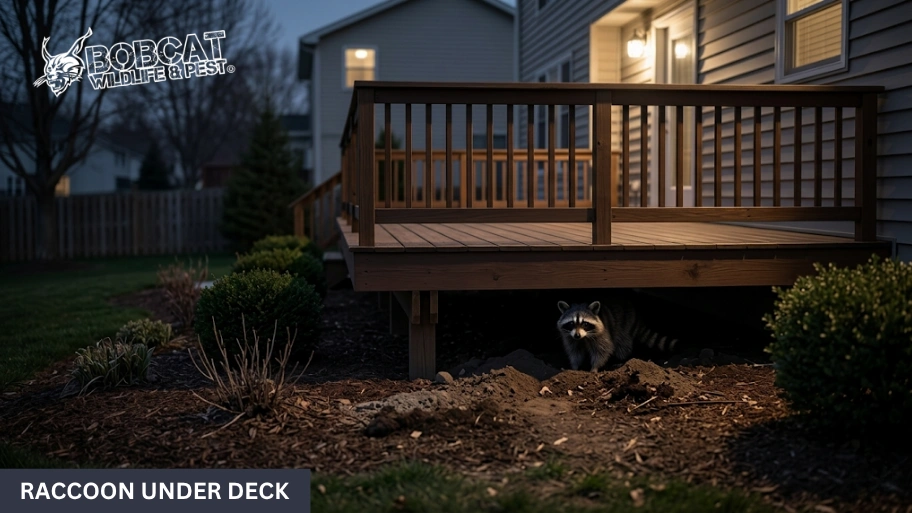
Check for babies before taking action, then seal the entry once it’s gone to keep it from coming back.
If it won’t leave or the situation feels unsafe, professional raccoon removal may be the safest option.
What This Guide Covers:
- Quick Answer: How to Get Rid of a Raccoon Under Your Deck
- Hearing Scratching or Smelling Something Outside? You Might Have a Raccoon Under Your Deck
- Why This Is Happening to Your Home in Des Moines
- How to Get Rid of a Raccoon Under Your Deck (What Actually Works)
- Why This Problem Gets Worse Fast If You Wait
- What Most Homeowners Get Wrong When Trying to Fix This
- When It’s Time to Call for Raccoon Removal in Des Moines, Iowa
- FAQs About Raccoons Under Decks in Des Moines
Hearing Scratching or Smelling Something Outside? You Might Have a Raccoon Under Your Deck
If you’re hearing scratching at night, noticing movement under your deck, or smelling something strong outside, it’s usually not nothing.
Most people ignore it at first, until it keeps happening and starts to feel like something’s actually living there.
Here’s what people usually notice:
From what Gene and the team see around Des Moines, once these signs show up consistently, it usually means the raccoon has already settled in, not just passing through.
If that sounds like what’s been going on, you’re likely dealing with something that won’t leave on its own.
The next step is understanding what’s really happening under your deck and what to watch for before doing anything about it.
Why This Is Happening to Your Home in Des Moines
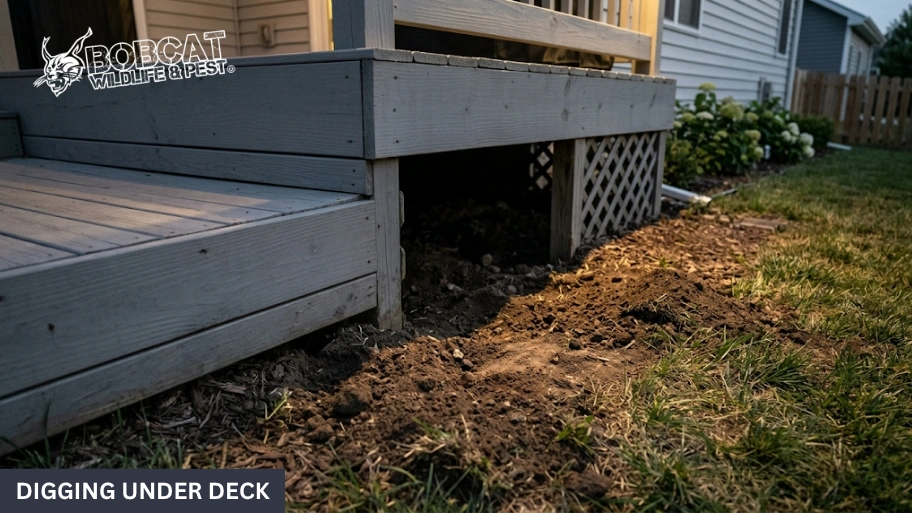
In our experience around Des Moines, raccoons don’t end up under decks or porches by accident.
They’re choosing spots that give them the best mix of safety, cover, and easy access without being disturbed.
Here’s what usually draws them in:
This becomes more common in spring, when female raccoons start looking for places to nest and keep their babies hidden.
That’s why a raccoon under porch areas or a raccoon under house spaces often means they’re planning to stay, not just pass through.
From what Gene and the team have seen, once a raccoon finds a spot that checks all these boxes, it tends to treat it like a reliable den site.
Even small openings or areas that don’t seem obvious to homeowners can be enough for them to get in and settle down.
How to Get Rid of a Raccoon Under Your Deck (What Actually Works)
If you’re trying to figure out how to get rid of a raccoon under your deck, the goal is simple: get it to leave on its own, make sure it’s fully gone, and then block it from getting back in.
Here’s what actually works in real situations.
Step 1: Make Sure It’s a Raccoon (Not Something Else)
Before doing anything, it helps to know you’re dealing with the right animal.
Raccoons are usually:
From what Gene and the team see, misidentifying the animal is one of the most common reasons homeowners try the wrong solution first.
Step 2: Make the Area Uncomfortable So It Leaves
Once you’re confident it’s a raccoon, the next step is to make the space feel unsafe so it chooses to leave.
What tends to work best:
The goal here isn’t to trap or force it out—it’s to make the area less appealing so it moves on.
Step 3: Check for Babies Before Taking Action
This is where a lot of people run into problems.
In spring, raccoons often use spaces like decks to raise their young. If babies are present, the mother will not leave, no matter how uncomfortable the area becomes.
From what Gene and the team have seen, trying to force a raccoon out during this time can lead to:
Step 4: Use a Simple Test to Know If It’s Gone
Before closing anything up, you need to be sure the raccoon is no longer using the space.
A simple method many professionals use is the “paper test”:
If it remains undisturbed, that’s a strong sign the raccoon has moved on.
Step 5: Seal the Entry So It Doesn’t Come Back
Once you’re confident the raccoon is gone, the final step is to block access completely.
This usually involves:
Skipping this step is one of the primary reasons why the problem comes back later, based on our observations in the field.
Why This Problem Gets Worse Fast If You Wait
Once a raccoon settles in under your deck, it usually doesn’t stay contained to just that space.
From what Gene and the team see around Des Moines, the longer it’s left alone, the more comfortable it gets moving closer to the structure of your home.
Here’s what tends to happen over time:
One thing that’s not obvious to most homeowners is how quickly that shift can happen.
What starts as something under the deck can turn into something inside the home faster than expected, especially once the animal feels undisturbed.
That’s why timing matters. The earlier you deal with it, the simpler it is to handle.
What Most Homeowners Get Wrong When Trying to Fix This
A lot of people try to handle this on their own, which makes sense. The problem is, small mistakes early on can drag it out or make it harder to deal with later.
Here are the most common things we see go wrong:
- 1
Sealing the opening too early
Closing things up while the raccoon is still inside can trap it in or push it to find another way into the structure.
- 2
Ignoring the possibility of babies
This is especially common in spring. If young are present, the adult won’t leave, no matter what you try, and the situation tends to stall or get worse.
- 3
Assuming it will leave on its own
Once a raccoon finds a spot that works, it usually sticks with it. Waiting it out rarely solves the problem.
From what Gene and the team have seen, these are the same issues that turn what could have been a straightforward situation into something that takes longer, costs more, and creates more damage.
If you’ve been trying to figure out how to get rid of raccoons under your house or deck and it’s not working, it’s often because one of these steps is getting in the way.
When It’s Time to Call for Raccoon Removal in Des Moines, Iowa
Sometimes the clearest answer is knowing when to stop trying to handle it yourself.
If you’re noticing any of the following, it’s time to involve a skunk removal professional in Des Moines:
Gene and the team have seen this, this is usually the point where homeowners are tired of guessing and just want the problem handled the right way.
The good news is, you don’t have to figure this out on your own. Professional removal is designed to take care of the situation safely, without the back-and-forth that often comes with trial and error.
If you’re dealing with something that won’t go away, you can learn more about your options here:
👉 Raccoon Removal Services in Des Moines, Iowa
Getting it handled early can save you a lot of time, stress, and potential damage down the line.
FAQs About Raccoons Under Decks in Des Moines

About the Author
Jared Riedemann is the Des Moines Branch Manager for Bobcat Wildlife & Pest Management. He works closely with homeowners and businesses throughout the Des Moines Metro area to solve pest and wildlife problems and help protect their properties.
Jared believes early action is the key to preventing larger pest issues. Through his hands-on experience and commitment to customer service, he helps property owners find effective solutions for a wide range of pest and wildlife concerns.