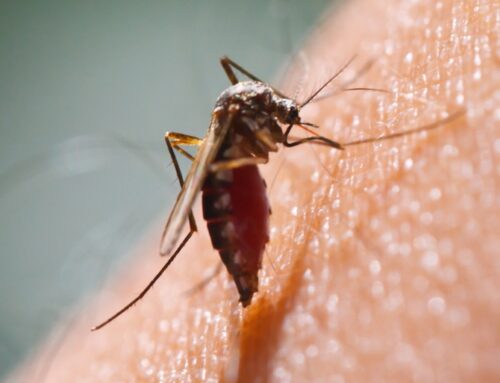
If mosquitoes seem worse around your yard this year, you are not alone.
Many Des Moines homeowners start seeing more mosquitoes in backyard areas once Iowa’s heat, humidity, and heavy rain settle in.
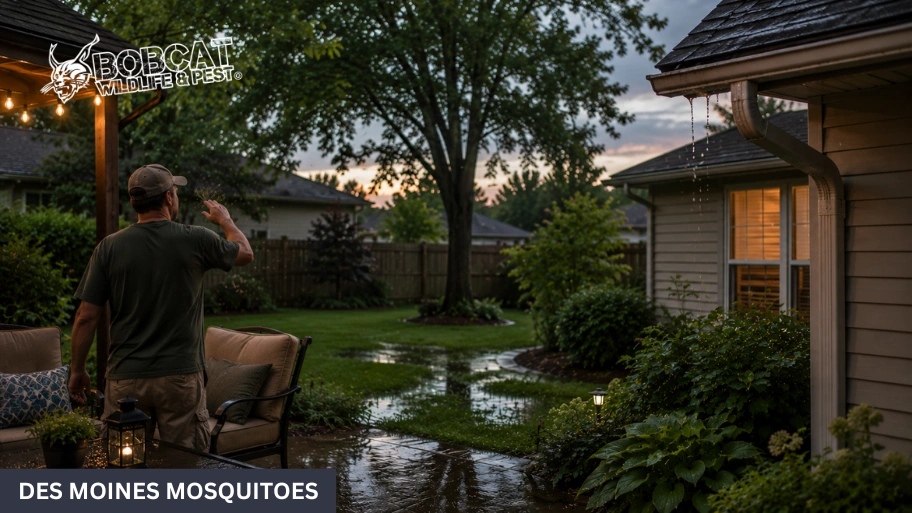
Standing water, clogged gutters, and shaded areas around the yard can quickly turn into mosquito breeding spots.
According to Gene Spaulding of Bobcat Wildlife & Pest Management, many homeowners are surprised by how little water mosquitoes need to multiply around a property during Iowa mosquito season.
Below, we’ll cover why mosquitoes are so bad this year, how to keep mosquitoes away, and when mosquito control in Des Moines may become worth considering.
What This Guide Covers:
- Why Mosquitoes Get So Bad Around Des Moines Homes During Iowa Summers
- Common Mosquito Hotspots Most Homeowners Overlook
- How to Reduce Mosquitoes in Your Yard Before the Problem Gets Worse
- Why Some Des Moines Properties Struggle With Mosquitoes More Than Others
- When Professional Mosquito Control Becomes Worth It
- What Des Moines Homeowners Commonly Get Wrong About Mosquito Prevention
- FAQs About Mosquito Control in Des Moines
Why Mosquitoes Get So Bad Around Des Moines Homes During Iowa Summers
Some Des Moines properties naturally experience heavier mosquito activity than others during Iowa summers.
Moisture, shade, and limited airflow can create the kind of environment where mosquitoes stay active longer and reproduce faster.
According to the team at Bobcat Wildlife & Pest Management, the properties with the worst mosquito problems are often the ones that stay damp long after rain passes.
Several conditions can make mosquito activity worse around a home, including:
This is one reason why mosquitoes are so bad this year around many Des Moines neighborhoods.
Once Iowa’s summer heat and humidity settle in, mosquito populations can increase quickly around moisture-heavy properties.
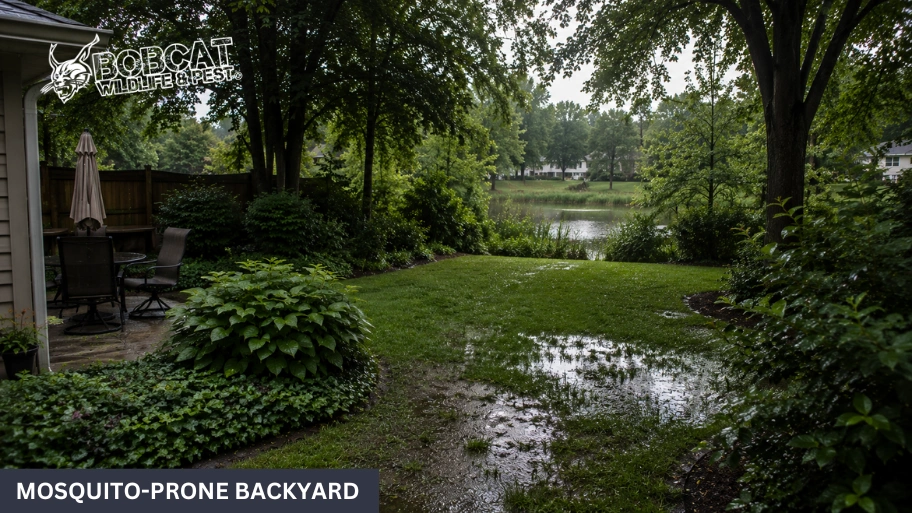
Common Mosquito Hotspots Most Homeowners Overlook
Many homeowners look for one major mosquito source around the yard, but in reality, mosquitoes often come from several small areas that are easy to miss during everyday routines.
According to the team at Bobcat Wildlife & Pest Management, some of the most overlooked mosquito hotspots around Des Moines homes include:
One thing many homeowners do not realize is that mosquitoes only need a small amount of standing water to start breeding.
Even areas that seem harmless can contribute to growing mosquito activity around the property during Iowa mosquito season.
This is why mosquito problems can continue even when there is no large pond or obvious water source nearby.
In many cases, mosquitoes in backyard spaces are building up from several hidden breeding spots around the home.
How to Reduce Mosquitoes in Your Yard Before the Problem Gets Worse
If you are trying to figure out how to get rid of mosquitoes in your yard, the biggest goal is reducing the areas where mosquitoes can rest, hide, and breed around the property.
Small changes around the yard can make a noticeable difference during Iowa mosquito season.
Here are some practical ways to help keep mosquitoes away from outdoor spaces:
According to the team at Bobcat Wildlife & Pest Management, many homeowners wait until mosquito activity becomes overwhelming before taking action.
The earlier moisture-heavy areas are addressed, the easier it usually is to reduce mosquito activity before populations grow around the yard.
For homeowners wondering how to get rid of mosquitoes outside, early prevention and consistent maintenance usually make a much bigger difference than occasional DIY sprays alone.
Why Some Des Moines Properties Struggle With Mosquitoes More Than Others
Some homes naturally deal with heavier mosquito problems than others because certain property conditions make it easier for mosquitoes to stay active and reproduce throughout the summer.
According to the team at Bobcat Wildlife & Pest Management, some of the worst mosquitoes in backyard situations they see around Des Moines are often connected to properties with:
These conditions create cooler, damp environments where mosquitoes in Iowa tend to stay active longer during hot summer months.
Homes with limited sunlight and poor airflow around patios, decks, or landscaping often experience more noticeable mosquito activity during the evening.
The Bobcat team also commonly sees mosquito problems become worse when several of these conditions exist together around the same property.
Even if neighboring homes have fewer mosquitoes, moisture-heavy yards can still attract larger mosquito populations throughout Iowa mosquito season.
When Professional Mosquito Control Becomes Worth It
For many homeowners, mosquito problems reach a point where basic prevention steps are no longer enough to keep the yard comfortable.
This is especially common during Iowa mosquito season when repeated rain and heat allow mosquito populations to keep rebuilding around the property.
Professional mosquito control in Des Moines often becomes worth considering when homeowners start dealing with:
- 1
Mosquito swarms after heavy rain
- 2
Recurring mosquito problems every summer
- 3
Difficulty enjoying patios, decks, or backyard spaces
- 4
Constant mosquito activity during outdoor gatherings
- 5
Large properties with shaded or wooded areas
- 6
Yards near creeks, retention ponds, or heavy landscaping
According to the team at Bobcat Wildlife & Pest Management, early-season treatments are usually more effective than waiting until mosquito activity becomes overwhelming.
Once mosquito populations spread across multiple breeding areas around a property, reducing activity can become much harder during peak summer conditions.
For properties with recurring mosquito issues, professional treatments are often used as a way to help reduce mosquito pressure throughout the season and make outdoor areas more comfortable to use again.
What Des Moines Homeowners Commonly Get Wrong About Mosquito Prevention
Many homeowners try to figure out how to keep mosquitoes away, but some common prevention mistakes can allow mosquito problems to keep getting worse throughout the summer.
According to Gene Spaulding and the team at Bobcat Wildlife & Pest Management, one of the biggest mistakes homeowners make is waiting until mosquito activity becomes severe before taking action.
By that point, mosquitoes may already be breeding in multiple areas around the property.
Some other common mosquito prevention mistakes include:
The Bobcat team also commonly sees homeowners focus only on killing adult mosquitoes instead of reducing the conditions that allow mosquitoes to keep returning.
While sprays may temporarily repel mosquitoes, moisture-heavy areas around the property can continue attracting new mosquito activity during Iowa summers.
For homeowners wondering how to repel mosquitoes more effectively, early prevention and reducing breeding conditions around the yard usually make a bigger long-term difference than temporary DIY treatments alone.
FAQs About Mosquito Control in Des Moines
When do mosquitoes come out in Iowa?
Mosquitoes in Iowa usually start becoming active during late spring once temperatures stay consistently warm, but activity often increases much faster after periods of rain and humidity.
In many Des Moines neighborhoods, homeowners begin noticing mosquitoes around patios, decks, and backyards as early as May.
According to the team at Bobcat Wildlife & Pest Management, mosquito activity can continue throughout the summer if breeding areas around the property are not reduced early.
Warm evenings, standing moisture, and humid weather allow mosquito populations to grow quickly during Iowa mosquito season.
Why are mosquitoes so bad this year in Iowa?
One reason why mosquitoes are so bad this year is because repeated rainstorms and humid weather create ideal breeding conditions around homes and neighborhoods.
Moisture tends to collect in hidden areas around the yard, allowing mosquito populations to build faster than many homeowners expect.
The Bobcat team commonly sees heavier mosquito activity after long stretches of warm weather combined with frequent rain.
Once breeding starts around moisture-heavy properties, mosquitoes can multiply quickly during Iowa summers, especially in shaded areas with limited airflow.
What attracts mosquitoes to my backyard?
Mosquitoes are usually attracted to areas with moisture, shade, and places where water can collect after rain.
Thick landscaping, damp grass, clogged gutters, and standing water around outdoor items can all contribute to mosquito activity around a property.
According to Bobcat Wildlife & Pest Management, many homeowners are surprised that mosquitoes in backyard spaces often come from several small problem areas instead of one obvious water source.
Homes near wooded lots, creeks, or retention ponds may also experience heavier mosquito activity during Iowa mosquito season.
How do I get rid of mosquitoes in my yard?
If you are trying to figure out how to get rid of mosquitoes in your yard, the first step is reducing the conditions that allow mosquitoes to breed and stay active.
Removing standing water, improving drainage, trimming overgrown landscaping, and reducing moisture-heavy areas can make a noticeable difference.
The Bobcat team also commonly recommends focusing on hidden breeding areas homeowners often overlook, such as clogged gutters, patio covers, flower pots, and shaded corners of the yard that stay damp longer after rain.
How do you get rid of mosquitoes outside naturally?
Many homeowners try to get rid of mosquitoes outside naturally by improving airflow around patios and outdoor seating areas, reducing standing water, and trimming landscaping that traps moisture and humidity.
Outdoor fans can also help because mosquitoes struggle in moving air.
According to the team at Bobcat Wildlife & Pest Management, natural prevention works best when homeowners consistently reduce the moisture-heavy conditions mosquitoes rely on throughout Iowa mosquito season instead of only reacting once mosquito activity becomes severe.
How do I keep mosquitoes away from my backyard?
One of the best ways to keep mosquitoes away from your backyard is to reduce the damp, shaded conditions mosquitoes are attracted to during Iowa summers.
Regularly removing standing water, trimming thick landscaping, and improving airflow around patios or decks can help lower mosquito activity around outdoor spaces.
According to the team at Bobcat Wildlife & Pest Management, many Des Moines homeowners focus only on visible mosquitoes while missing the small moisture-heavy areas around the property that continue attracting new mosquito activity throughout the season.
Why are mosquitoes worse after rain in Des Moines?
Mosquitoes often become much worse after rain because water collects in hidden areas around the property, creating ideal breeding conditions.
Warm temperatures and humidity afterward allow mosquito eggs to hatch and populations to grow quickly.
The Bobcat team commonly sees mosquito activity spike after several rainy weeks, especially around shaded yards, clogged gutters, and properties with poor drainage.
Even small amounts of standing water left behind after storms can contribute to heavier mosquito problems around Des Moines homes.
Can mosquitoes breed in gutters?
Yes. According to the team at Bobcat Wildlife & Pest Management, clogged gutters are one of the most overlooked mosquito breeding areas they commonly see during Iowa mosquito season.
After storms, leaves and debris can trap water inside gutters for days, especially around older gutter systems with slower drainage.
Many homeowners focus on ponds or large water sources while missing the smaller moisture-heavy areas around the roofline that can quietly contribute to mosquito activity around the yard.
What areas around a home commonly attract mosquitoes?
Mosquitoes are usually attracted to areas that stay damp, shaded, and humid during the summer.
Around Des Moines homes, common mosquito hotspots include thick landscaping, low drainage areas, shaded patios, clogged gutters, and outdoor items that collect rainwater.
Properties near wooded areas, creeks, retention ponds, or heavy tree cover may also experience more mosquito activity because those environments tend to trap moisture and limit airflow around the yard.
How do I keep mosquitoes out of my house?
Keeping mosquitoes out of your house usually starts with reducing mosquito activity around entry points outside the home.
Damaged window screens, gaps around doors, and outdoor lighting near entrances can all make it easier for mosquitoes to enter during the evening.
According to the team at Bobcat Wildlife & Pest Management, homeowners often see better results when they combine indoor prevention with outdoor mosquito reduction around patios, landscaping, and shaded areas near the home.
Why do mosquitoes come out more at dusk?
Mosquitoes are usually more active at dusk because temperatures become cooler and conditions are less harsh than during the middle of the day.
Lower sunlight, reduced wind, and higher evening humidity allow mosquitoes to move around more comfortably.
According to the team at Bobcat Wildlife & Pest Management, many Des Moines homeowners notice the worst mosquito activity during the evening hours around patios, decks, and backyard gathering spaces.
Properties with heavy shade or poor airflow often experience even stronger mosquito activity around sunset.
What smells or scents help repel mosquitoes?
Some scents commonly used to help repel mosquitoes include citronella, peppermint, eucalyptus, lavender, and lemon eucalyptus oil.
Many homeowners use these around patios or outdoor seating areas during Iowa mosquito season.
While certain scents may temporarily help reduce mosquito activity nearby, the Bobcat team commonly reminds homeowners that repellents alone usually will not solve larger mosquito problems if breeding conditions around the property are still present.
Do shaded yards attract more mosquitoes?
Yes. Mosquitoes are strongly attracted to shaded areas because those spaces stay cooler, damper, and more humid during hot Iowa summers.
Thick landscaping, dense tree cover, and areas with limited airflow often allow mosquitoes to stay active longer throughout the day.
According to Bobcat Wildlife & Pest Management, some of the worst mosquitoes in backyard situations they see around Des Moines are connected to heavily shaded properties that hold moisture after rainstorms.
Are mosquitoes worse near ponds, creeks, or wooded areas?
Properties near ponds, creeks, wooded lots, or retention ponds often experience heavier mosquito activity because those environments naturally hold more moisture and shade.
Mosquitoes thrive in damp outdoor areas where water and humidity remain consistent during the summer.
The Bobcat team commonly sees mosquito populations become harder to manage around properties surrounded by tree cover or nearby water sources, especially after repeated rain and humid weather patterns across Iowa.
How often should mosquito treatments be done during Iowa mosquito season?
Treatment frequency depends on the property, surrounding conditions, and how severe mosquito activity becomes during the season.
Homes with wooded lots, heavy landscaping, or recurring mosquito problems often require more consistent treatments than properties with fewer moisture-heavy conditions.
According to the team at Bobcat Wildlife & Pest Management, early-season mosquito treatments are often more effective because they help reduce mosquito activity before populations become established around the property during peak summer conditions.
Is professional mosquito control worth it for large backyards?
For many homeowners with large backyards, wooded lots, or recurring mosquito problems, professional mosquito control can help reduce mosquito activity across outdoor areas that are difficult to manage with basic DIY methods alone.
According to the team at Bobcat Wildlife & Pest Management, larger properties often contain multiple moisture-heavy areas where mosquitoes can continue breeding throughout the season.
Homes near creeks, retention ponds, or dense landscaping may also experience mosquito problems that return quickly after rain without more consistent treatment and prevention efforts.
Is mosquito control safe for kids and pets?
Many professional mosquito control treatments are designed to be applied safely when used correctly and according to label guidelines.
Homeowners should always follow any recommendations provided after treatment, including waiting periods before re-entering treated areas if advised.
According to Bobcat Wildlife & Pest Management, many families in Des Moines choose professional mosquito control to make outdoor spaces more comfortable during Iowa summers while still keeping safety in mind for children and pets.
Can standing water in small containers attract mosquitoes?
Yes. Mosquitoes only need a small amount of standing water to begin breeding, which is why even small containers around the yard can contribute to mosquito problems.
The Bobcat team commonly sees mosquitoes breeding in overlooked areas such as flower pots, kids’ toys, buckets, tarps, patio furniture covers, and clogged drainage areas.
Many homeowners focus on large water sources while missing the smaller moisture-heavy spots that quietly allow mosquito populations to grow around the property.
What time of year is mosquito season worst in Iowa?
Mosquito season in Iowa is the worst in the summer when it is hot and humid, especially after repeated rain.
Mosquito activity often increases significantly once heat and moisture begin building across neighborhoods and outdoor areas.
According to the team at Bobcat Wildlife & Pest Management, many Des Moines homeowners notice the worst mosquito activity during mid-to-late summer when breeding cycles continue repeating after frequent rain and humid weather patterns.
What can homeowners do early in the season to reduce mosquito problems?
Early prevention can make a major difference before mosquito populations grow around the property during Iowa mosquito season.
Cleaning gutters, improving drainage, trimming landscaping, and removing standing water early in the season can help reduce breeding conditions before mosquito activity becomes severe.
The Bobcat team commonly recommends addressing moisture-heavy areas before repeated summer rainstorms begin creating long-term mosquito problems around patios, decks, and backyard gathering spaces.

About the Author
Jared Riedemann is the Des Moines Branch Manager for Bobcat Wildlife & Pest Management. He works closely with homeowners and businesses throughout the Des Moines Metro area to solve pest and wildlife problems and help protect their properties.
Jared believes early action is the key to preventing larger pest issues. Through his hands-on experience and commitment to customer service, he helps property owners find effective solutions for a wide range of pest and wildlife concerns.