If you’re thinking, “There’s a skunk under my house,” don’t panic — but don’t seal it up either.
Blocking the hole can trap the skunk underneath and increase the chances it sprays. Skip the mothballs and ammonia. They usually don’t work and can make things worse.
Don’t try to scare it out. If there are babies involved, the situation gets more complicated.
Gene Spaulding, owner of Bobcat Wildlife & Pest Management, says the biggest mistake he sees in Des Moines is homeowners trying to fix it without confirming what’s actually under the house.
If you’re wondering how to get rid of skunk under house areas safely, it starts with a proper inspection and a safe removal plan.
Below, we’ll walk through what to look for and what to do next.
How to Tell If There’s a Skunk Living Under Your House
To confirm a skunk living under house foundations or crawlspaces, look for patterns — not just a random smell.
Watch for:
A strong odor concentrated near one section of the foundation
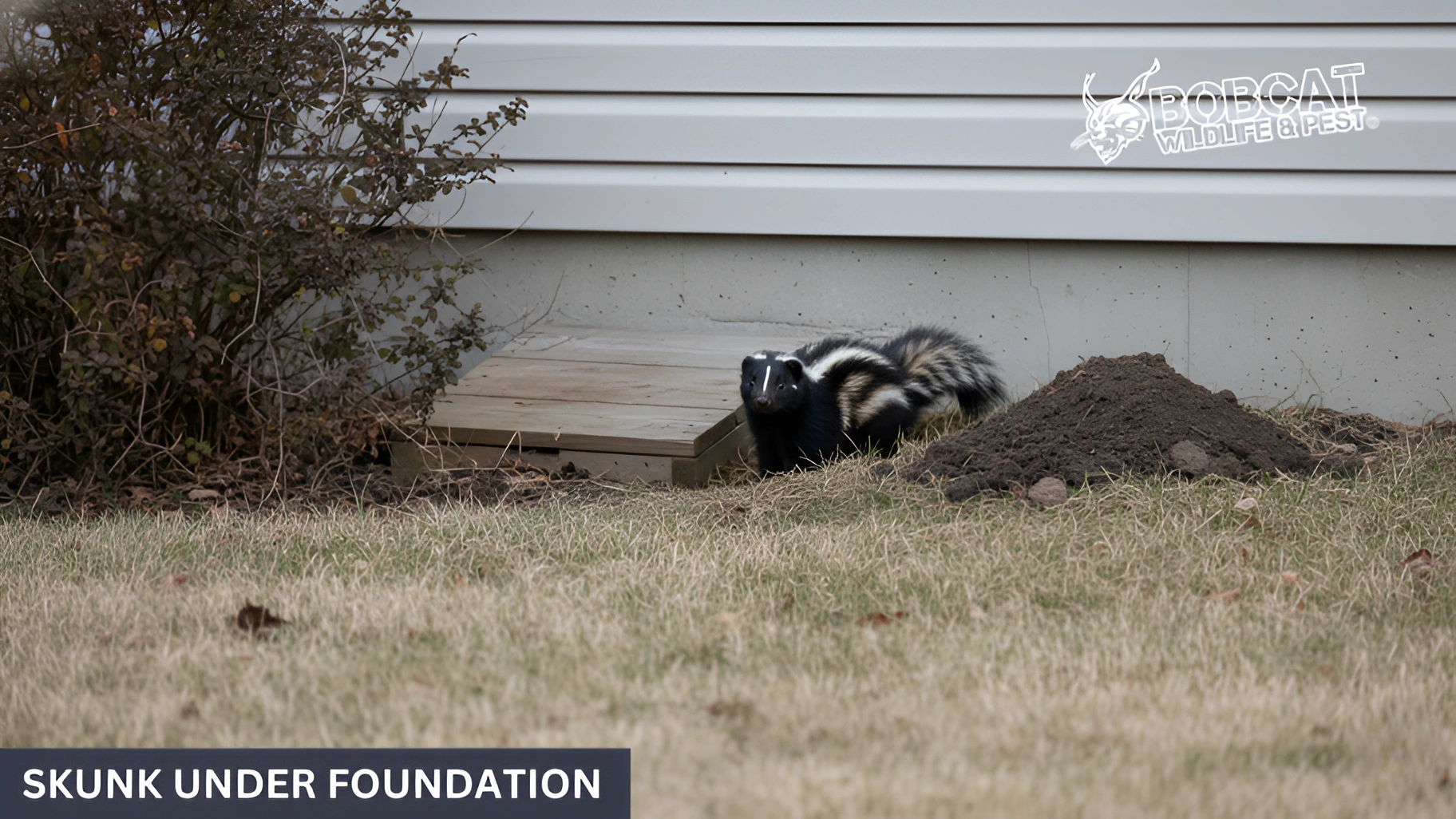
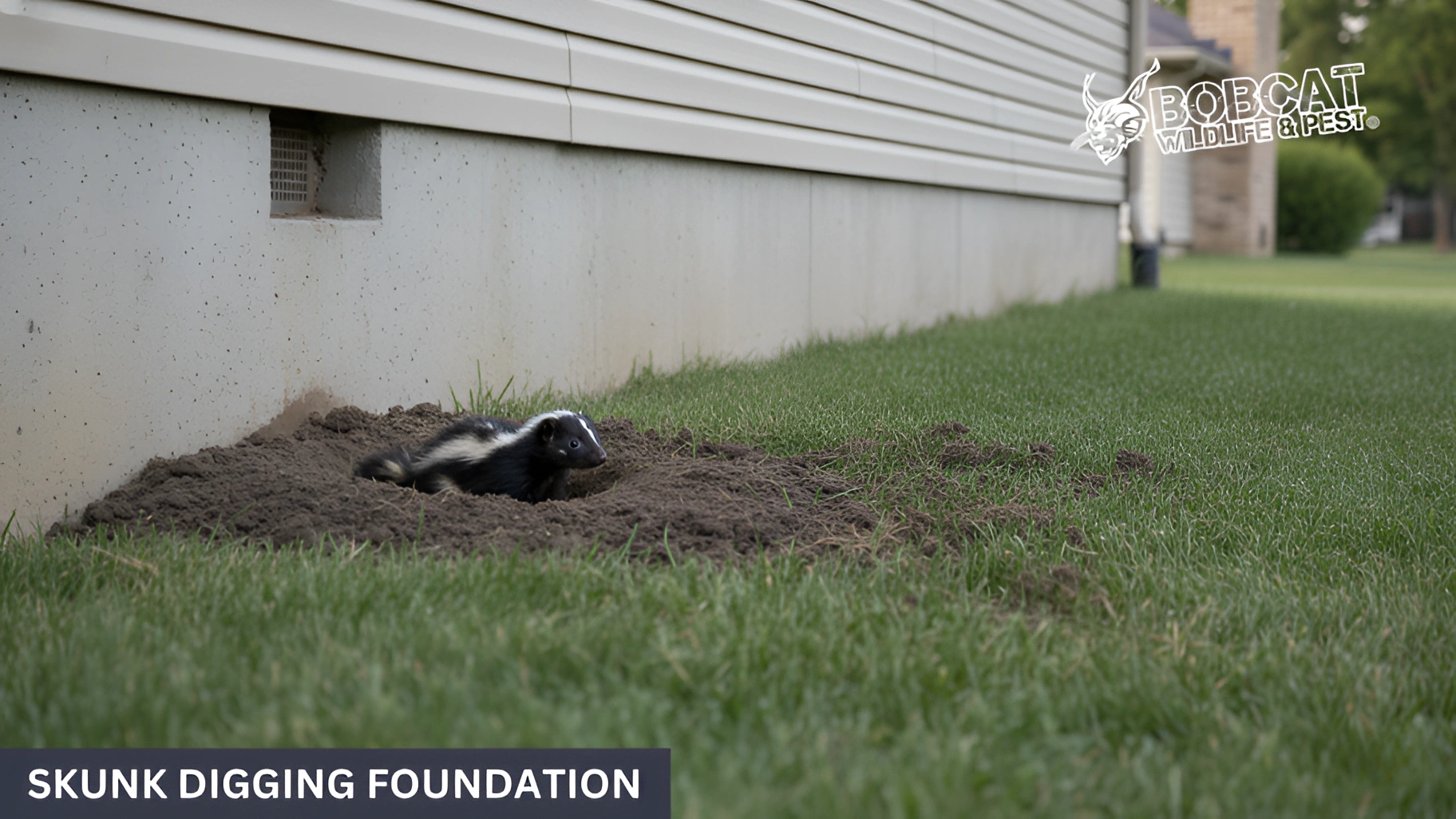
A low, rounded opening along the edge of the house, usually about 3–4 inches tall
Fresh dirt pushed outward in a small mound, not scattered widely
Repeated light digging in the same lawn area
Movement or rustling after dark in one consistent spot
Skunks typically den tight against structures rather than in open yard spaces.
Gene notes that in Des Moines homes, activity often shows up near crawlspace vents, under concrete steps, or along deck edges where there’s cover on three sides.
If you’re seeing multiple signs in one location, that usually indicates an active den rather than a passing animal.
Why This Is Happening in Des Moines Right Now
If this activity seems sudden, it’s usually seasonal — not random.
In late winter and early spring, skunks begin searching for secure den sites ahead of breeding season. During this period, they shift from temporary shelter to longer-term nesting spots.
In Des Moines, a few conditions make homes especially attractive:
Fluctuating winter temperatures that push wildlife to find stable shelter
Softening ground near foundations, which makes shallow digging easier
Snow cover that previously hid entry gaps, now melting and exposing access points
Concrete steps, decks, and crawlspaces that hold residual warmth
Gene notes that many homeowners assume wildlife activity peaks in summer, but in Central Iowa, den selection often begins weeks before consistent warm weather arrives.
This timing catches people off guard — especially when the yard looks quiet during the day.
Why a Skunk Under Your House Can Become a Bigger Problem
Now that you know why skunks choose homes this time of year, the bigger concern is what happens if they stay.
A skunk under your house doesn’t just occupy space. Over time, several secondary issues can develop:
Spray traveling through vents and floor gaps, especially when the animal feels startled by normal household noise
Insulation becoming compressed or contaminated, which can trap odor and reduce its effectiveness
Fleas and external parasites moving beyond the den area, creating a separate pest issue
Repeated shallow digging along the foundation, gradually widening existing gaps
Baby skunks complicating removal, since timing and humane handling become more critical
In homes we’ve inspected across Des Moines, one of the most overlooked issues is odor settling into insulation and subfloor materials.
Even after the animal leaves, the scent can linger if the nesting area isn’t properly addressed.
What begins as a quiet den can slowly turn into a structural and sanitation concern — especially if it goes unchecked for weeks.
How to Get Rid of a Skunk Under Your House Safely
Once you’ve confirmed activity and understand the risks, the next question is practical: how do you actually solve it?
When homeowners search for how to get rid of skunk under house areas safely, they’re often looking for quick fixes. The reality is that some common methods don’t address the root issue.
What Usually Doesn’t Work
These methods often delay proper resolution:
Mothballs or ammonia placed near the opening — skunks can tolerate strong odors more than most people expect
Sealing the hole before confirming the skunk has exited — this can trap the animal inside
Noise, vibration, or light deterrents — skunks tend to wait them out rather than abandon a secure den
Surface-level soil filling without addressing the underlying entry gap
These approaches may shift activity temporarily but don’t eliminate access.
A safe, lasting solution follows a controlled process:
Detailed inspection of all potential entry points, not just the visible burrow
Verification of whether young are present, which changes removal timing
Humane trapping or monitored exit strategies, depending on activity
One-way exclusion devices that prevent re-entry once the den is inactive
Permanent sealing and reinforcement of vulnerable edges
Gene explains that exclusion timing is critical. In Des Moines homes, sealing even one day too early can mean reopening the structure later.
Proper removal depends on confirming the space is clear before closing it off.
If you’re still wondering how to get rid of skunk under house areas the right way, the key difference is control and timing — not shortcuts.
How to Get Rid of Skunks Under a Shed or Around Your House
If the den isn’t under your foundation, it may be under a shed, porch, or deck.
Homeowners often search how to get rid of skunks under shed structures because these areas provide similar shelter without being directly attached to the house.
Sheds and outbuildings create ideal den conditions because they often have:
Open soil edges with no buried barrier
Loose skirting or untreated gaps
Less foot traffic, which makes the space feel undisturbed
Low clearance that limits predator access
Unlike foundations, sheds typically lack reinforced footings, which makes digging easier and re-entry more common if gaps aren’t properly secured.
When people ask how to get rid of skunks around your house, it often starts with yard digging that leads back to a structure.
The professional solution remains the same in principle — confirm activity, remove the animal safely, and reinforce vulnerable edges — but shed structures usually require added ground-level reinforcement to prevent repeat denning.
Addressing the access point is just as important as addressing the animal.
When to Call a Skunk Removal Professional in Des Moines
Sometimes the clearest answer is knowing when to stop trying to handle it yourself.
If you’re noticing any of the following, it’s time to involve a skunk removal professional in Des Moines:
- 1
The odor isn’t going away, even after several days
- 2
You suspect babies are present, which requires careful timing
- 3
Spray has reached the crawlspace or vents
- 4
DIY attempts haven’t changed the activity
- 5
Digging has widened gaps along the foundation or shed
At this point, the situation usually needs more than surface-level fixes. Waiting longer often means more cleanup and more structural repair later.
Gene often reminds homeowners that wildlife issues rarely resolve themselves once a den is established. The earlier it’s addressed, the simpler the solution tends to be.
If you believe there’s wildlife under your home or shed in the Des Moines area, contacting a licensed professional ensures the animal is removed safely and the access point is properly secured — so the problem doesn’t return.
FAQs About Skunks Under Houses in Des Moines
Confirmation usually comes from consistent patterns, not a single clue.
A strong odor that lingers near one section of the foundation, a low burrow opening pressed tightly against the structure, and repeated nighttime activity in the same area together point to an active den.
In Des Moines homes with crawlspaces, activity often concentrates near vents or under concrete steps where there is cover and warmth.
If signs persist for several days in the same spot, it is rarely just a passing animal.
Skunks are nocturnal and cautious. You may never see the animal even if it is denning under your home.
A lingering odor near foundation edges, deck corners, or sheds can indicate a nearby den site. In some cases, the smell may drift from a neighboring property.
The key difference is consistency. If the odor repeatedly returns to the same location on your property, it is likely originating from beneath or very close to your structure.
Yes, but the noise is usually subtle. Homeowners often describe light scratching, shuffling, or brief movement sounds close to the ground. Unlike raccoons, skunks do not create loud thumping.
In crawlspace homes, the sound may travel through floor vents or ductwork, making it seem louder than it is.
Skunk burrows are typically shallow and rounded, often about three to four inches tall.
The opening is usually tight against the structure, and dirt is pushed outward in a small mound.
You will not usually see deep tunnel systems. The digging is focused and compact.
If the area feels secure and undisturbed, a skunk may remain for several weeks.
During breeding season in late winter or early spring, the stay may extend longer if young are present.
Once established, they rarely leave on their own without a change in conditions.
Skunks are not confrontational by nature, but they will protect themselves if startled or cornered.
The primary risk is spray. Additionally, skunks can carry parasites and, in rare cases, rabies.
The risk increases when pets investigate den areas or when homeowners attempt to approach the animal directly.
Skunks do not chew through concrete, but repeated digging can widen existing gaps along foundation edges or shed bases.
In crawlspaces, nesting activity can compress insulation or contaminate it with waste. Over time, this may affect odor control and indoor air quality.
Yes. Skunks are known rabies carriers in Iowa. They may also host fleas and other external parasites.
While human transmission is uncommon, pets that encounter a den area are more vulnerable.
Vaccinated pets reduce the risk, but exposure should still be taken seriously.
Spray inside or beneath a structure can travel through vents and floor gaps. The odor can settle into insulation and subfloor materials.
In some cases, the smell lingers long after the animal is gone if the affected area is not properly cleaned or replaced.
Visible burrows, lingering odor, or documented wildlife damage can raise concerns during a home inspection.
While a single wildlife incident does not permanently lower value, unresolved den activity may impact buyer confidence.
Safe removal begins with confirming activity and determining whether young are present.
Humane trapping or monitored exclusion methods are typically used.
The key is removing the animal without causing spray incidents or trapping it inside. Proper timing and controlled handling are essential.
Iowa wildlife regulations apply to trapping and relocation. Improper trapping can create legal issues or increase safety risks.
Professional removal ensures compliance with state guidelines and reduces the chance of spray or injury.
Strong odors may temporarily disturb a skunk, but they rarely cause an established den to be abandoned.
Skunks often tolerate these deterrents longer than homeowners expect. In active den situations, repellents alone are usually ineffective.
If the skunk is still inside, sealing the entry point can trap it beneath the structure.
This may increase stress and the likelihood of spraying. It can also require reopening the area to correct the mistake.
Wildlife trapping laws in Iowa regulate how and when certain animals may be captured.
Relocation may also be restricted. It is important to follow state and local guidelines to avoid fines or improper handling.
Removal under a shed follows the same principles as under a house, but sheds often require additional ground-level reinforcement.
Without buried barriers or proper skirting, re-entry is more common if the base is not secured.
Skunks often dig for grubs and insects. Small cone-shaped holes scattered across the lawn are usually feeding behavior.
If digging is concentrated near a structure, it may indicate nearby denning.
Humane removal and exclusion methods are the safest approach.
The goal is to allow the animal to exit and prevent re-entry without injury.
Lethal control is rarely necessary for residential den situations.
If the entry point remains accessible, another skunk may use the same location.
Skunks often reuse proven den sites. Reinforcement and sealing are critical to preventing repeat activity.
Prevention typically involves sealing foundation gaps, reinforcing crawlspace edges, and installing ground-level barriers where soil meets the structure.
Routine inspections around sheds and decks can help catch vulnerabilities early.