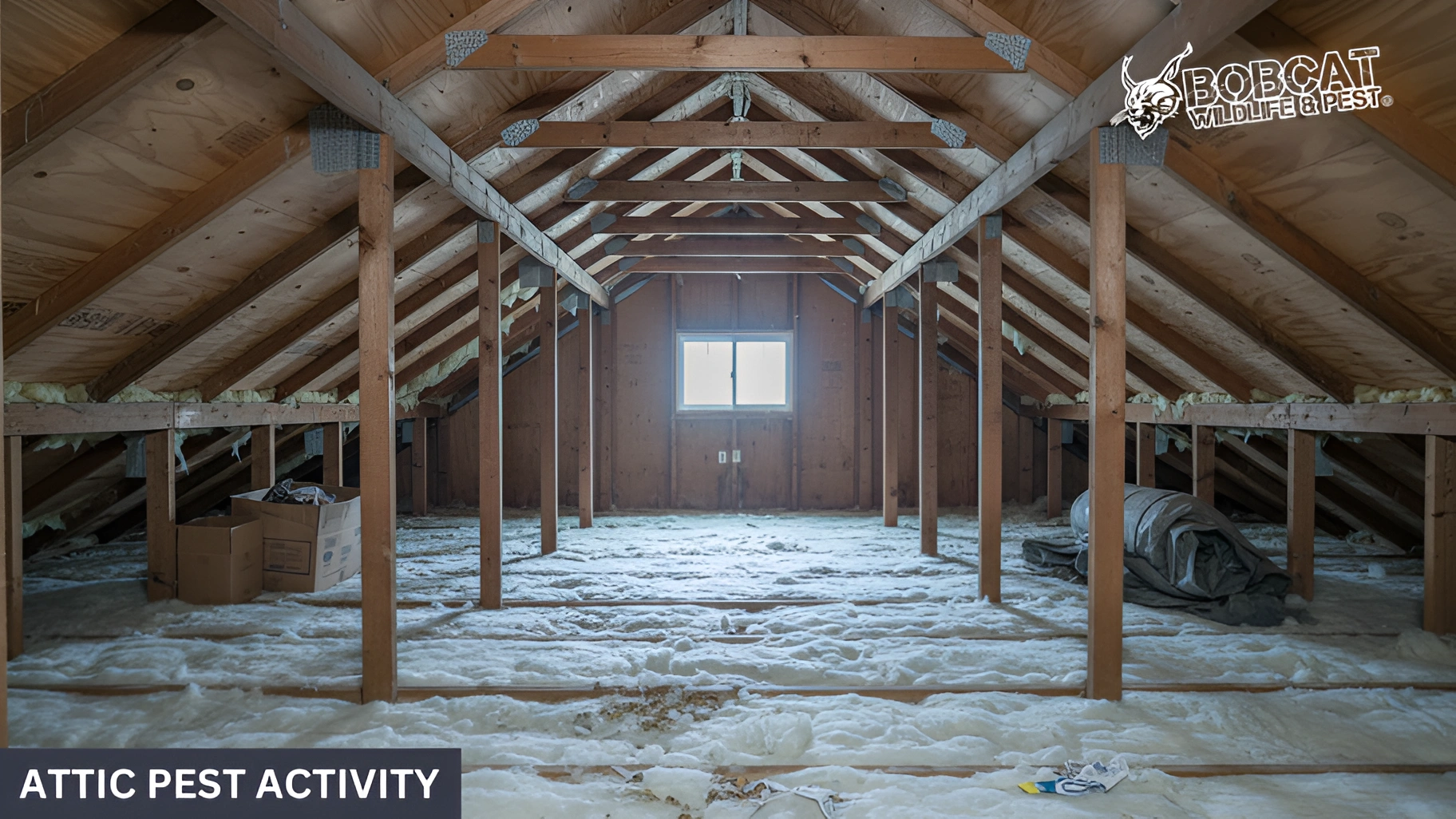
Pests in attic before spring are common in Iowa because temperature swings push insects and animals to look for stable warmth and shelter.
Attics warm up faster than living spaces during late winter, making them an ideal place for nesting.
According to Gene Spaulding, owner of Bobcat Wildlife & Pest Management, this early attic activity is common in Des Moines homes and often begins weeks before spring officially arrives.
This guide explains why it happens, what pests are usually involved, the signs to watch for, and when it makes sense to take action.
Is It Normal to See Attic Pests Before Spring in Iowa?
Yes. Seeing critters in the attic is very common for Des Moines homeowners and it is rarely a cleanliness issue.
In most cases, the cause is structural and seasonal rather than something the homeowner did wrong:
Freeze-thaw cycles cause small shifts around rooflines, vents, and flashing
These changes create tiny openings that are easy to miss from the ground
Pests take advantage of those access points once activity increases
This happens just as often in newer or well-maintained homes as it does in older ones.
Gene Spaulding explains that many pre-spring attic pest calls come from homeowners who are surprised by the issue because they take good care of their homes.
In his experience, the problem is usually normal seasonal movement combined with small entry points that most people would never think to check.
What Pests Are Commonly Found in Attics Before Spring?
When homeowners notice activity overhead, it helps to narrow down what type of pests in attic spaces are most common this time of year.
Each behaves differently, and those differences can offer clues about what you’re dealing with.
Ants don’t usually live in attics permanently, but they often use attic insulation as a temporary staging area.
Why this happens:
Insulation provides warmth without foot traffic
Ants can move along beams and wiring unseen
Moisture from rooflines or vents can support colonies
Why this matters:
Ant activity in the attic is often an early sign that ants may move into kitchens or pantries once spring arrives.
Spiders use attics as overwintering shelters rather than primary nesting areas.
What spider presence usually indicates:
Other insects are already present nearby
The attic offers stable conditions for hunting
Spider sightings often reflect a broader insect issue
This is why spiders are often considered a warning sign rather than the main problem.
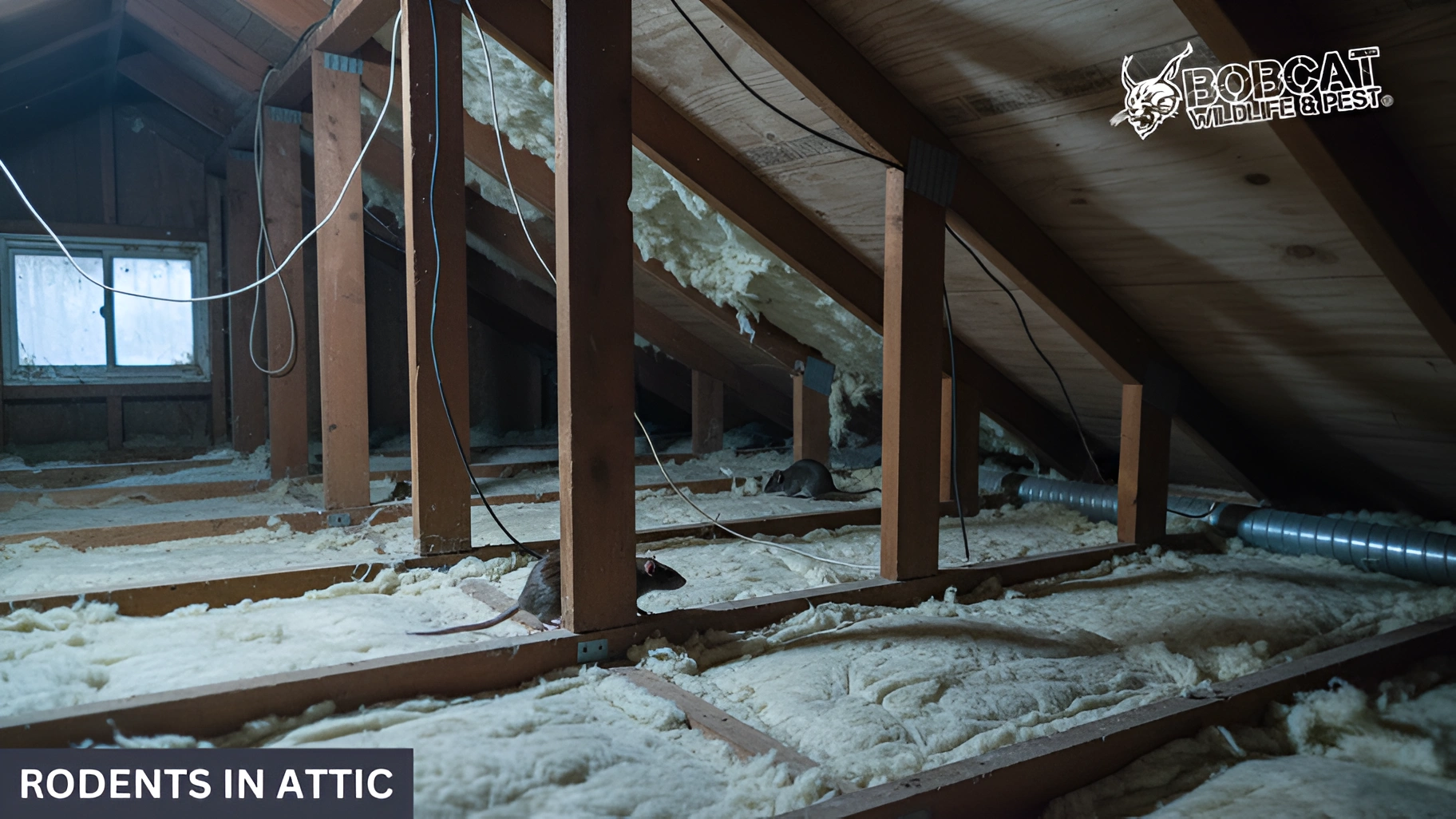
Rodents and small wildlife tend to be noticed first because of sound.
Common noise patterns homeowners report:
Light scratching or scurrying along insulation
Repeated movement in the same area
Occasional thumps near rooflines or vents
Activity often increases as animals move more frequently and prepare nesting areas.
Gene Spaulding explains that attic pests are frequently misidentified based on sound alone. In his experience, louder noises don’t always mean larger animals, and lighter, repeated sounds can sometimes indicate more activity than homeowners realize.
Signs You May Have Pests in the Attic
After understanding which pests are commonly found in attics before spring, the next step is recognizing the signs you might notice day to day.
Most homeowners don’t see pests directly. Instead, they pick up on small changes that feel out of place.
Here are the most common signs people notice when they start wondering if there are critters in my attic:
Scratching or movement sounds
Repeated light noises in the same general area often point to ongoing activity, not just normal house settling. Patterns matter more than volume.
Droppings or nesting material
Small droppings, shredded insulation, or paper-like debris near attic access points usually indicate that something is spending time there, not just passing through.
Bugs appearing indoors unexpectedly
Ants or spiders showing up without an obvious entry point can be a downstream sign of attic activity rather than an indoor issue.
Insulation disturbance
Insulation that looks flattened, shifted, or uneven near walkways or corners often suggests repeated movement over time.
Unusual pet behavior
Pets tend to notice attic activity before people do. Repeated staring, alert behavior, or reacting to specific ceiling areas can be an early clue.
One sign on its own doesn’t always mean there’s a problem. What typically raises concern is consistency.
When the same noises, sightings, or behaviors keep happening in the same areas, it’s often a sign that attic activity is more than just a one-off event.
How Do Pests Get Into Attics in Des Moines Homes?
Once homeowners start noticing consistent signs of attic activity, the next question is usually how anything got in there in the first place.
In most cases, pests enter through small, hidden access points that develop gradually and are easy to miss, especially in Iowa homes.
These are the most common entry paths, and why they often go unnoticed:
Roofline gaps
Tiny separations can form where shingles, fascia, and siding meet. These areas are rarely visible from the ground, but they provide direct access to attic spaces.
Vents and soffits
Attic, bathroom, and dryer vents are designed to let air out, not keep pests out. Over time, screens loosen or soffit panels shift, creating openings that are just large enough for pests to enter.
Utility penetrations
Pipes, cables, and wiring that pass through the roof or exterior walls often leave narrow gaps. Pests follow these lines because they naturally lead to warm, protected spaces.
Freeze-thaw damage common in Iowa
Repeated freezing and thawing causes building materials to expand and contract. This slow movement can widen seams and joints without causing obvious damage, which is why the problem often goes unnoticed.
What makes these entry points tricky is that they usually don’t look like “damage.”
Most homeowners only discover them after activity in the attic becomes consistent.
That’s why pests in attic spaces are common even in homes that are well maintained and regularly inspected.
Why Waiting Until Spring Often Makes Attic Pest Problems Worse
It’s tempting to take a “wait and see” approach, but with pests in attic spaces, delaying action often allows a small issue to grow into a bigger one.
Once pests are settled, time tends to work in their favor, not the homeowner’s.
Here’s what typically happens when attic activity is left unchecked:
What is safe and helpful right now
These steps help you stay informed without escalating the problem:
Limit checks to observation only
Look from the attic access point if it’s safe and well lit. You’re looking for patterns like disturbed insulation or debris, not trying to investigate every corner.
Note consistency, not one-time events
Repeated noises in the same area or ongoing signs are more meaningful than a single sound or sighting.
Keep attic access closed and undisturbed
Reducing foot traffic and disturbance helps prevent pests from relocating deeper into the structure.
What often causes more damage than people expect
These are the actions that tend to complicate removal later:
Disturbing insulation, nests, or droppings
This can spread contaminants and break up nesting areas in a way that pushes pests into wall cavities.
Sealing openings too early
Closing access points before the attic is properly evaluated can trap pests inside and force them into living spaces.
Using DIY traps or sprays without identification
These rarely solve attic issues and often cause pests to move rather than leave, increasing activity in other parts of the home.
What Gene Spaulding often sees is that well-intentioned DIY efforts make attic problems harder to resolve.
In many cases, the safest move is simply to avoid interference until the situation can be properly assessed. That approach protects both the home and the people living in it.
How Professional Attic Pest Control Helps Before Spring
After deciding not to disturb attic activity on your own, professional attic pest control becomes about control and prevention, not just removal.
The difference is in how the work is approached and in what order.
Here’s how professional help is designed to keep attic issues from escalating as spring approaches:
1. Inspection and accurate identification
Professionals start by confirming what’s actually causing the activity before taking action.
- Identifies the specific pest involved, not just the symptom
- Distinguishes between insects, rodents, and wildlife that can sound similar
- Prevents using the wrong solution, which often makes problems worse
This step alone eliminates much of the guesswork homeowners struggle with.
2. Targeted pest removal from attic spaces
Once the pest is confirmed, pest removal from attic areas is handled in a way that limits movement into walls or living spaces.
- Removal methods are chosen based on pest behavior, not convenience
- Activity is addressed at the source, not pushed elsewhere
- Solutions are adjusted for ants, spiders, rodents, or wildlife rather than using a one-size approach
This is where professional experience matters most.
3. Entry-point sealing done at the right time
Sealing is effective only after removal is handled correctly.
- Entry points are addressed once attic activity is under control
- Prevents trapping pests inside the home
- Reduces repeat infestations as temperatures rise
Timing is critical, and this step is often where DIY efforts fail.
4. Prevention planning for the season ahead
Professional attic pest control doesn’t stop at removal.
- Identifies conditions that could attract pests again
- Recommends attic pest-proofing where needed
- May include residential pest control to reduce future activity
At Bobcat, this process supports services like ant control, spider control, rodent removal, and wildlife removal, all with the goal of preventing small attic issues from turning into full spring infestations.
Why this approach works better than quick fixes
Gene Spaulding often sees attic problems become more complicated when steps are rushed or done out of order.
In his experience, methodical inspection, proper removal, and well-timed prevention keep attic pest issues simpler and more manageable long-term.
When It’s Time to Call a Professional
After understanding how professional attic pest control works, the remaining question is when observation stops being helpful.
In practice, there are a few clear signals that guessing is no longer productive and pest removal from attic spaces should be handled by a professional.
These triggers are less about urgency and more about pattern and persistence:
Persistent noises in the same areas
Occasional sounds can be normal, but repeated movement coming from the same section of the attic usually means ongoing activity rather than a one-time disturbance.
Repeat sightings despite monitoring
When ants, spiders, or other pests continue to show up indoors over time, it often points to an established issue rather than incidental entry.
Visible damage to insulation or vents
Insulation that stays compressed or vents and soffits that show repeated disturbance suggest activity that isn’t resolving on its own.
Health or safety concerns
Droppings, strong odors, or concerns about contamination, allergies, or accidental contact are clear indicators that professional evaluation is the safer option.
What professionals look for in these situations is consistency.
Gene Spaulding explains that once patterns form, the problem rarely corrects itself without intervention. Addressing it at that stage is usually simpler and less disruptive than waiting for conditions to worsen.
Working with a local team like Bobcat Wildlife & Pest Management allows homeowners to move forward calmly, with clarity about what’s happening and what steps actually make sense next.
The goal is not to rush action, but to step in once it’s clear the issue has crossed from observation into resolution.
FAQs: Pests in the Attic Before Spring
Yes. This is one of the most common seasonal patterns seen in Iowa homes.
Late winter weather causes frequent temperature swings, and attics often become the most stable environment available.
Homeowners usually notice activity before spring officially begins, not because something suddenly went wrong, but because pests become more active and noticeable during this transition period.
Late winter conditions are unpredictable.
Freezing nights followed by warmer days make outdoor survival difficult, while attics offer consistent warmth, dryness, and protection.
Pests aren’t necessarily moving in all at once. Many have already been nearby and simply become more active as conditions change.
The most common attic pests before spring include ants, spiders, rodents, and small wildlife.
Insects often use attics as staging areas, while rodents and wildlife may use them for shelter or nesting.
Each behaves differently, which is why accurate identification matters before taking action.
House noises are usually random and inconsistent, often tied to temperature changes or structural settling.
Pest-related sounds tend to repeat in the same areas and follow a pattern.
If you notice consistent scratching, movement, or scurrying coming from one part of the attic, it’s more likely related to activity than normal house sounds.
Sometimes activity changes, but it rarely resolves completely on its own.
Once pests establish themselves in an attic, they often remain or move deeper into wall cavities or living spaces.
Waiting for warmer weather often delays resolution rather than solving the problem.
Yes. Attic damage often happens out of sight.
Pests can compress or contaminate insulation, damage vents or wiring, and create nesting areas long before anything appears indoors.
By the time pests are visible inside, attic damage may already be present.
They can be. Droppings, nesting materials, and contamination may affect indoor air quality and pose health concerns, especially for children, pets, or anyone with allergies or respiratory sensitivities.
Even without direct contact, attic activity can still impact the living environment below.
Common sounds include repeated scratching, light scurrying, or movement along insulation or rooflines.
What matters most is consistency. Sounds that occur regularly in the same area are more concerning than a single noise that doesn’t repeat.
Yes. Insulation provides warmth, shelter, and pathways for movement.
Ants may use it as a temporary staging area before expanding into living spaces, while spiders often overwinter in attics because of stable conditions and available food sources.
Most enter through small openings near rooflines, vents, soffits, or utility penetrations.
These gaps often form gradually due to Iowa’s freeze-thaw cycles and are easy to miss from the ground.
Entry points don’t always look like obvious damage.
A brief visual check from the attic access point can be helpful, but climbing through the attic or disturbing materials is not recommended.
Attics contain hazards such as uneven surfaces, exposed wiring, and contaminated insulation that homeowners aren’t equipped to handle safely.
Avoid disturbing insulation, sealing openings too early, or using traps or sprays without knowing what pest is present.
These actions often cause pests to relocate deeper into the structure, making removal more difficult later.
Delaying action allows nesting and reproduction to begin, which increases activity and spread.
Over time, pests may expand into walls or living spaces, and damage becomes more extensive.
Early attention usually keeps the situation simpler to resolve.
Yes. As activity increases, pests frequently move through wall voids, ceilings, and shared structural spaces.
This is often when homeowners first notice pests indoors, even though the attic issue started earlier.
If noises persist, signs repeat, damage becomes visible, or health concerns arise, it’s usually time to stop guessing.
A professional can confirm what’s happening and recommend the right next step without unnecessary disruption.
It typically starts with inspection and identification, followed by targeted removal, entry-point sealing, and prevention planning.
The process is designed to resolve current activity while reducing the risk of future issues.
Attic situations require careful sequencing.
Removing pests without proper planning can push them into walls or living spaces.
Professional attic work focuses on containment, removal, and prevention in the correct order.
Yes. When combined with proper sealing, exclusion, and ongoing prevention, attic pest control significantly reduces the likelihood of repeat problems as seasons change.
Sealing helps, but only after pests are properly addressed. Sealing too early can trap pests inside and create new issues elsewhere in the home.
A local provider familiar with Iowa homes and seasonal pest patterns, such as Bobcat Wildlife & Pest Management, can evaluate attic activity and recommend the most appropriate solution based on what’s actually happening.