
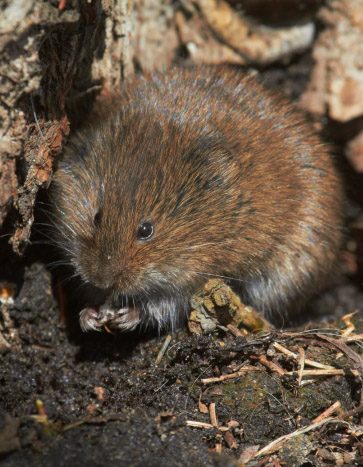
WHY CONTROL VOLES?
Voles are easy to overlook—until they’ve wrecked your lawn, garden, or landscape.
If you’re spotting trails in the grass, soft ground, or plants mysteriously dying off, you’re likely dealing with an active infestation.
These tiny rodents burrow just below the surface, cutting through root systems and leaving behind a trail of damage that gets worse the longer it’s left alone.
1. Preserve Lawn and Garden Health
Voles chew through roots and dig networks of shallow tunnels, making your yard feel unstable and look patchy. Catching the problem early keeps your outdoor space healthy, clean, and easier to maintain.
2. Prevent Property Damage
Those tunnels don’t just harm the lawn. If left unchecked, they can stretch beneath patios, driveways, and even your home’s foundation—causing issues that aren’t just cosmetic.
3. Protect Your Landscape Investment
Whether it’s a well-tended flower bed or new shrubs along the walkway, voles don’t care. They’ll chew through the plants you’ve spent time and money to grow.
At Bobcat Wildlife & Pest Management, we handle vole removal in Des Moines, IA and nearby towns with local expertise, fast response, and proven methods that work.
Think you’ve got voles? Schedule service today—before they dig in any deeper.
VOLE CONTROL SERVICES
When voles start tunneling through your yard, you need more than a quick fix—you need a plan that works for your property.
At Bobcat Wildlife & Pest Management, we use proven, low-impact techniques to remove voles while keeping your landscape protected and intact.
Already noticing damage? We’re here to help with expert vole removal trusted by homeowners across the Des Moines area.
OUR VOLE REMOVAL PROCESS
At Bobcat Wildlife & Pest Management, we tackle the unique challenges posed by voles with a comprehensive approach. This includes meticulous inspections, ethical removal methods, and proactive preventive measures.
Each step of our process is carried out with careful attention to detail, ensuring your property remains secure and free from vole disruptions.
DEALING WITH MORE THAN JUST VOLES?
Facing other unwelcome wildlife or pest issues? Bobcat Wildlife & Pest Management is equipped to handle a variety of challenges:
All-Inclusive Wildlife Management
Whether it’s raccoons rummaging through your trash or squirrels nesting in your attic, our team has the expertise to manage all types of wildlife issues. We use humane relocation methods to ensure animals are safely and responsibly moved away from your property.
Advanced Insect Control
From termite infestations to ants in your kitchen, our insect control solutions are tailored to eliminate and prevent these pests effectively. Our targeted strategies are designed to keep your home free from insect invasions.
Comprehensive Rodent Control
If your home is being overrun by mice or rats, our efficient rodent control techniques will quickly and thoroughly remove these pests. We ensure your living spaces remain rodent-free, providing long-term peace of mind.
At Bobcat Wildlife & Pest Management, we offer a broad range of services to tackle any pest or wildlife issue you might face. Our comprehensive approach ensures that your property stays protected from all kinds of intruders, not just voles. If moles are also a concern, learn about our Mole Control services.
HOW TO IDENTIFY VOLE ACTIVITY

Spotting vole activity early can help you prevent extensive damage to your property. Here are some key signs to look for in your yard:
1. Surface Runways and Burrows
Look for narrow, well-worn paths or runways on the surface of your lawn, often leading to small burrow entrances. These trails are a clear sign of vole activity as they move through their established routes.
2. Damaged Vegetation
Check for plants with chewed stems, roots, or bark, especially near ground level. Voles feed on a variety of vegetation, causing visible damage to garden plants, shrubs, and trees.
3. Soft, Spongy Ground
Walk around your yard and feel for areas where the ground feels unusually soft or spongy. This can be a sign of extensive burrowing activity beneath the surface, disrupting the soil structure.
MAIN ISSUES
Why Choose Bobcat Wildlife & Pest Control

Bobcat Wildlife & Pest Management came to my house to deal with a serious bat problem. I have had no issues with bats since they came, and the guy who did the work on my house was thorough and took obvious pride in his work. They are knowledgeable and thorough and don’t take the easy way out. It was clear that they really cared about solving my bat issue and I highly recommend them to anyone with a bat problem.

What a great experience Ronnie Hayes came to our place he came to our place assessed that we had a few raccoons in our attic. He even put a trap on the roof and for them out the same day then the relocated them. For a very responsible place.

Highly recommend using this company for any pest control needs and or wildlife issues.
Jared was super helpful, set up traps, and we are looking forward to a raccoon free attic.

They do an amazing job with our pest control and keeping all the mosquitos at bay. I really appreciate how caring & respective Gene is towards these animals and rodents…

Highly recommend this group!!! Within 24 hours of my “something stinks” panic call, one of the techs, Ronnie, was at our place taking care of the animals that found their final resting place in our vents… and patched it up so we wouldn’t have this happen again. On time, efficient, and very knowledgeable!!

Knowledgeable, careful, and insightful-I had the opportunity to meet with Nicole Spaulding from Bobcat Wildlife and Pest Management to learn more of what she does and to ask questions about their industry, fearing it affected my own (outdoor aquatic stock growth).She took the time to share with me the ins-and-outs of her industry, genuinely caring for my concerns, resolving them completely in the end.

Thank you so much! We debated calling for a long time. When I finally did Blake came the very next day and trapped the squirrel who was the culprit of the damage. He fixed the damage too! We are so happy we finally called, wish we would have done it sooner! Thanks Blake!
Frequently Asked Questions About Vole Removal in Des Moines, IA
How do I know if I have voles in my yard in Des Moines, IA?
The most common signs of voles in Des Moines yards are narrow surface runways, damaged grass, and small openings in the ground.
Unlike moles, voles spend much of their time traveling above ground beneath vegetation and yard debris.
Homeowners often notice:
- Thin pathways through grass or mulch
- Small burrow openings near landscaping
- Damaged plants or shrubs
Many vole infestations are first discovered after snow melts and hidden damage becomes easier to see.
Bobcat Wildlife & Pest Management helps identify active vole activity and determine how widespread the problem may be.
What does vole damage look like in a lawn?
Vole damage often appears as winding pathways through the grass, thinning turf, and damaged vegetation.
These pathways are created as voles repeatedly travel between feeding and nesting areas.
Many Des Moines homeowners notice:
- Surface runways in grass
- Dead or weakened patches of turf
- Gnaw marks on plants and shrubs
- Small openings leading into burrows
Bobcat Wildlife & Pest Management helps determine whether lawn damage is being caused by voles or another pest before treatment begins.
How can I tell the difference between vole damage and mole damage?
Vole damage usually appears at or near the surface, while mole damage typically creates raised tunnels and ridges beneath the lawn.
A simple comparison is:
- Voles create visible pathways through grass
- Moles leave raised ridges and dirt mounds
- Voles feed on vegetation and roots
- Moles primarily feed on insects underground
Because the two pests require different control approaches, proper identification is important.
Bobcat Wildlife & Pest Management helps Des Moines homeowners determine which animal is responsible for the damage.
Do voles damage grass, plants, or tree roots?
Yes. Voles can damage grass, ornamental plants, shrubs, and young trees by feeding on vegetation, roots, and bark.
Their feeding activity may weaken plants and create noticeable landscape damage over time.
Des Moines property owners often find vole damage around:
- Flower beds
- Decorative shrubs
- Garden areas
- Newly planted trees
Bobcat Wildlife & Pest Management helps identify active feeding areas and determine how much of the damage is connected to vole activity.
Why are voles attracted to my yard?
Voles are attracted to yards that provide food, shelter, and protection from predators.
Dense vegetation, mulch beds, overgrown areas, and abundant plant material can make a property more appealing.
Common attractants include:
- Thick ground cover
- Tall grass and weeds
- Mulch around landscaping
- Accessible food sources and vegetation
Many homeowners in Des Moines unknowingly create ideal vole habitat through normal landscaping practices.
Bobcat Wildlife & Pest Management helps identify conditions that may be encouraging ongoing vole activity.
Are voles active during winter in Des Moines?
Yes. Voles remain active throughout the winter and often continue feeding beneath snow cover.
In fact, many homeowners do not realize they have a vole problem until the snow melts and the damage becomes visible.
During winter, voles may create:
- Surface runways hidden beneath snow
- Damage to grass and ground cover
- Gnaw marks on shrubs and young trees
Bobcat Wildlife & Pest Management helps Des Moines homeowners identify whether damage discovered in late winter or early spring is connected to active vole activity.
Can voles come inside my home?
Voles typically prefer outdoor environments and are far less likely to enter homes than mice. They spend most of their time in lawns, gardens, landscaping beds, and other vegetated areas.
However, voles may occasionally be found near:
- Foundations and crawl spaces
- Garages and sheds
- Landscaping close to structures
Many Des Moines homeowners confuse voles with mice because of their similar appearance.
Bobcat Wildlife & Pest Management helps correctly identify the animal and recommend the most appropriate solution.
Why do voles keep coming back after I clean up the yard?
Voles may continue returning if food sources, shelter, or nesting areas remain available nearby.
While yard cleanup can help reduce habitat, it may not eliminate an established vole population.
Recurring activity often happens when:
- Dense vegetation remains nearby
- Burrow systems are still active
- Neighboring properties provide suitable habitat
- Food sources continue to be available
Bobcat Wildlife & Pest Management helps Des Moines homeowners identify conditions that may be contributing to repeated vole activity.
What does professional vole removal usually include?
Professional vole removal typically begins with an inspection to confirm vole activity, identify damaged areas, and locate places where voles are feeding or nesting.
Depending on the situation, the process may include:
- Evaluating active vole activity
- Identifying nesting and feeding areas
- Implementing targeted control measures
- Recommending habitat modification strategies
Bobcat Wildlife & Pest Management helps Des Moines homeowners take a more comprehensive approach to vole control rather than relying solely on temporary solutions.
When should I call Bobcat Wildlife & Pest Management for vole removal?
You should consider contacting Bobcat Wildlife & Pest Management when lawn damage continues spreading, plants are being damaged, or previous control efforts have not resolved the problem.
Early action can help protect:
- Lawns and turf areas
- Flower beds and gardens
- Shrubs and ornamental plants
- Young trees and root systems
Many Des Moines homeowners seek professional help after noticing recurring pathways, plant damage, or signs of vole activity despite making changes to their landscaping.
A professional inspection can find out how serious the problem is and suggest the best steps to take next.